
|
Course |
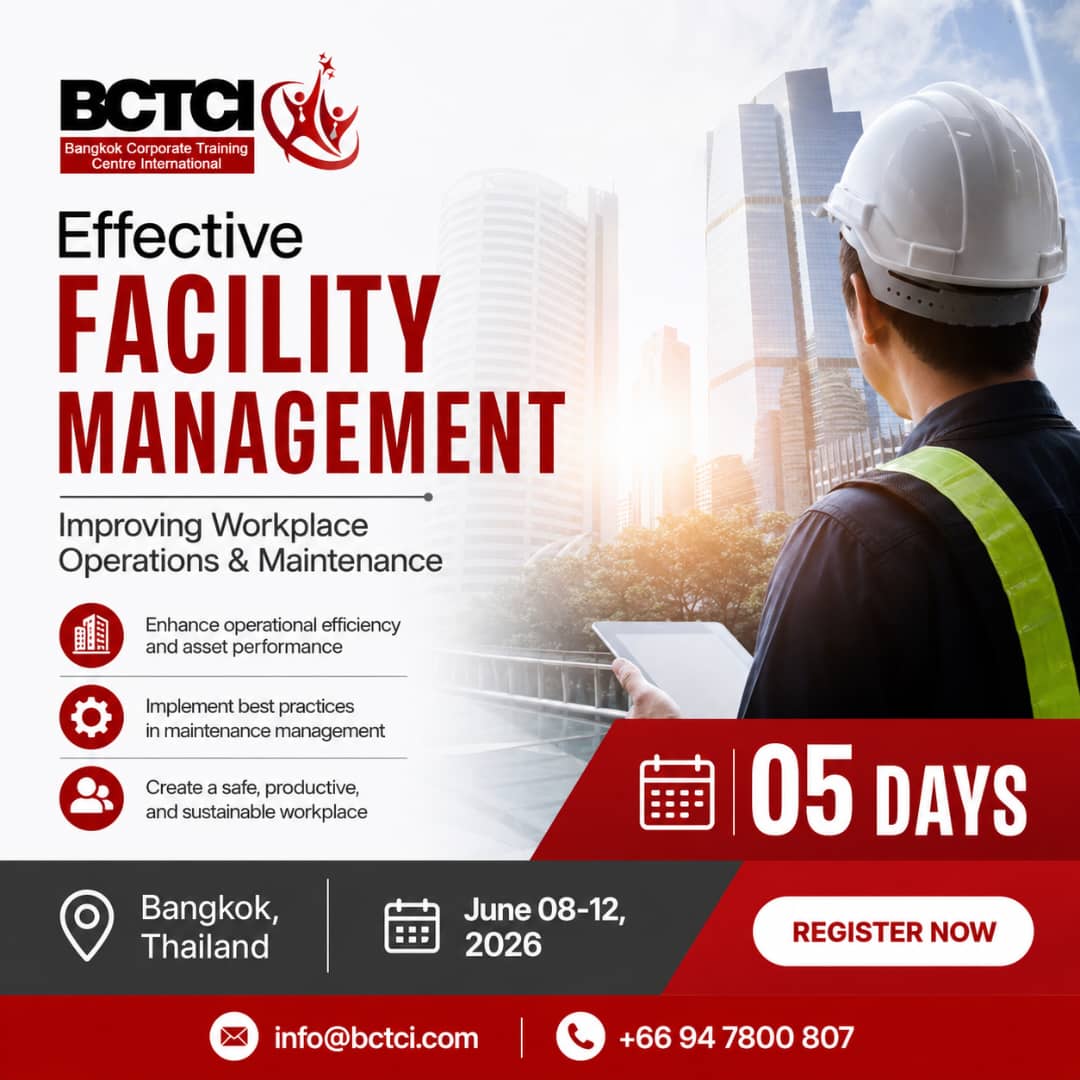
Effective Facility Management: Improving Workplace Operations & Maintenance |
|
Duration |
5 Days |
|
Date |
June 08-12,2026 |
|
Venue |
Bangkok, Thailand |
|
Investment |
1,790 USD |
|
|
|
|
|
+66 94 7800 807 |
Course Objectives
By the end of this course, participants will be able to:
- Understand the strategic role of facility management in supporting organizational performance.
- Improve workplace operations through better planning, coordination, and service delivery.
- Develop effective preventive and corrective maintenance systems.
- Manage building assets, equipment, utilities, vendors, and workplace services more efficiently.
- Strengthen health, safety, security, and emergency preparedness in facilities.
- Improve space utilization, workplace comfort, and employee experience.
- Apply performance indicators to measure facility service quality and maintenance effectiveness.
- Reduce operational costs through efficient resource planning and lifecycle management.
- Integrate sustainability and energy efficiency into facility operations.
- Build a practical facility management improvement plan for their organization.
Personal and Organizational Impacts
Personal Impacts
Participants will be able to:
- Improve confidence in managing daily facility operations and maintenance activities.
- Strengthen planning, coordination, and problem-solving skills.
- Understand how to prioritize maintenance and operational risks.
- Communicate more effectively with management, contractors, vendors, and building users.
- Improve technical and managerial understanding of workplace operations.
- Build stronger skills in service quality, asset management, and cost control.
- Make better decisions based on data, inspections, and performance indicators.
- Lead facility improvement projects with greater professionalism.
Organizational Impacts
The organization will benefit through:
- More reliable building operations and workplace services.
- Reduced equipment downtime and maintenance delays.
- Improved safety, comfort, and productivity of employees.
- Better control of operating costs and maintenance budgets.
- Longer asset life through planned maintenance and proper care.
- Stronger compliance with safety, health, and environmental requirements.
- Better vendor performance and service accountability.
- Improved workplace image and user satisfaction.
- More sustainable use of energy, water, and resources.
- A structured approach to continuous improvement in facility management.
Course Outline:
Foundations of Facility Management and Workplace Operations
Module 1: Introduction to Facility Management
- Meaning and scope of facility management
- Facility management as a strategic support function
- Hard services vs. soft services
- Role of facility managers in organizational success
- Key challenges in modern facility management
Module 2: Facility Management Functions and Responsibilities
- Building operations and maintenance responsibilities
- Workplace services and user support
- Safety, security, cleaning, and hygiene services
- Utility and energy management
- Coordination with finance, HR, procurement, and operations teams
Module 3: Workplace Operations Planning
- Planning daily, weekly, and monthly facility activities
- Prioritizing operational tasks
- Managing service requests and complaints
- Coordinating workplace support services
- Building a facility operations calendar
Module 4: Facility Management Policies and Procedures
- Importance of standard operating procedures
- Developing facility service standards
- Maintenance request procedures
- Escalation and approval procedures
- Recordkeeping and documentation requirements
Module 5: Facility Risk Assessment
- Identifying operational and maintenance risks
- Risk assessment for buildings and workplace services
- Prioritizing risks based on likelihood and impact
- Risk controls and mitigation actions
- Creating a facility risk register
Maintenance Management and Asset Reliability
Module 6: Maintenance Management Fundamentals
- Purpose of maintenance management
- Corrective, preventive, predictive, and condition-based maintenance
- Maintenance planning and scheduling
- Common causes of maintenance failure
- Maintenance roles and responsibilities
Module 7: Preventive Maintenance Planning
- Developing preventive maintenance schedules
- Identifying critical equipment and systems
- Inspection checklists and service intervals
- Maintenance task prioritization
- Monitoring preventive maintenance completion
Module 8: Corrective Maintenance and Breakdown Response
- Managing breakdowns and urgent repairs
- Response time and escalation procedures
- Root cause analysis for recurring failures
- Reducing repeat maintenance issues
- Tracking repair history and lessons learned
Module 9: Asset Management in Facility Operations
- Understanding facility assets and lifecycle management
- Asset registers and equipment records
- Asset condition assessment
- Replacement planning and lifecycle costing
- Linking asset management with maintenance budgets
Module 10: Maintenance Documentation and Reporting
- Work orders and maintenance logs
- Inspection reports and service records
- Spare parts and materials records
- Maintenance performance reports
- Using documentation for decision-making
Workplace Services, Safety, and User Experience
Module 11: Managing Workplace Services
- Reception, mailroom, transport, and general support services
- Cleaning and hygiene service management
- Waste management and housekeeping standards
- Food, pantry, and meeting room support
- Service level expectations and user satisfaction
Module 12: Space Management and Workplace Efficiency
- Space planning and utilization
- Workplace layout and movement flow
- Meeting rooms, shared spaces, and storage areas
- Managing overcrowding and underused space
- Improving comfort, accessibility, and productivity
Module 13: Health, Safety, and Environmental Management
- Facility-related health and safety risks
- Safety inspections and hazard reporting
- Fire safety and emergency exits
- Environmental management responsibilities
- Promoting safety culture in the workplace
Module 14: Security and Access Control
- Physical security in facilities
- Visitor management systems
- Access control and restricted areas
- CCTV and security monitoring
- Coordination with security service providers
Module 15: Emergency Preparedness and Business Continuity
- Facility emergency planning
- Fire, flood, power failure, and equipment failure response
- Evacuation planning and drills
- Communication during emergencies
- Business continuity support from facility management
Vendor, Cost, Energy, and Sustainability Management
Module 16: Vendor and Contractor Management
- Selecting facility service providers
- Contract scope and service expectations
- Contractor supervision and site coordination
- Vendor performance evaluation
- Handling poor performance and service disputes
Module 17: Service Level Agreements and Facility KPIs
- Understanding service level agreements
- Defining service standards and response times
- Key performance indicators for facility operations
- Measuring cleaning, security, maintenance, and user services
- Reporting service performance to management
Module 18: Facility Budgeting and Cost Control
- Facility operating budgets
- Maintenance cost planning
- Capital expenditure vs. operating expenditure
- Cost-saving opportunities in facility operations
- Monitoring budget variances and financial performance
Module 19: Energy and Utility Management
- Understanding energy and utility costs
- Monitoring electricity, water, and fuel consumption
- Identifying energy waste
- Energy-saving practices in buildings
- Reporting utility performance and savings
Module 20: Sustainable Facility Management
- Principles of sustainable facility operations
- Waste reduction and recycling programs
- Water conservation practices
- Green cleaning and environmentally friendly materials
- Building a sustainability action plan for facilities
Technology, Performance Improvement, and Action Planning
Module 21: Technology in Facility Management
- Computerized maintenance management systems
- Digital work order systems
- Facility dashboards and reporting tools
- Sensors, smart building systems, and automation
- Choosing appropriate technology for facility operations
Module 22: Quality Management in Facility Services
- Defining quality in facility management
- Facility inspection systems
- Service quality audits
- User feedback and complaint analysis
- Continuous improvement of workplace services
Module 23: Communication and Stakeholder Management
- Communicating with building users and departments
- Managing expectations and service requests
- Reporting facility issues to senior management
- Handling complaints professionally
- Building strong relationships with vendors and internal teams
Module 24: Facility Performance Improvement Strategy
- Identifying performance gaps
- Prioritizing facility improvement projects
- Developing improvement initiatives
- Measuring results and service impact
- Building a facility excellence roadmap
Module 25: Practical Workshop and Facility Action Plan
- Conducting a facility operations self-assessment
- Preparing a preventive maintenance improvement plan
- Developing facility KPIs and reporting templates
- Creating a workplace service improvement plan
- Group presentation and facilitator feedback
Main Takeaways
Participants will leave the course with:
- A clear understanding of modern facility management responsibilities.
- Practical knowledge of workplace operations and maintenance planning.
- Improved ability to manage preventive and corrective maintenance.
- Stronger understanding of asset management and lifecycle planning.
- Practical tools for improving workplace services and user satisfaction.
- Better skills in safety, security, and emergency preparedness.
- Improved ability to manage contractors, vendors, and service providers.
- Understanding of facility budgeting, cost control, and energy efficiency.
- Ability to use KPIs and reports to improve facility performance.
- A practical action plan to improve facility operations and maintenance.
Main Essentials:
The essential components of this course include:
- Operational Excellence
Improving daily workplace operations through better planning, coordination, and service standards. - Maintenance Effectiveness
Reducing breakdowns and downtime through preventive maintenance, inspections, and proper documentation. - Asset Reliability
Managing facility assets across their lifecycle to improve performance and reduce replacement costs. - Workplace Experience
Creating a safe, comfortable, clean, and productive workplace environment. - Health, Safety, and Security
Strengthening facility safety controls, emergency preparedness, and security management. - Vendor Performance
Managing contractors and service providers with clear expectations, monitoring, and accountability. - Cost and Budget Control
Planning facility budgets, controlling expenses, and identifying savings opportunities. - Energy and Sustainability
Reducing resource waste and improving environmental performance in facility operations. - Technology and Data
Using digital tools, maintenance systems, and dashboards to improve decision-making. - Continuous Improvement
Building a structured facility improvement roadmap with measurable results.
Suggested Training Methodologies
The course may be delivered through:
- Interactive lectures and facilitated discussions
- Facility management case studies
- Maintenance planning exercises
- Risk assessment workshops
- Inspection checklist development
- Group problem-solving activities
- Vendor management simulations
- KPI and reporting practice
- Facility improvement planning
- Group presentations and feedback