
|
Course |
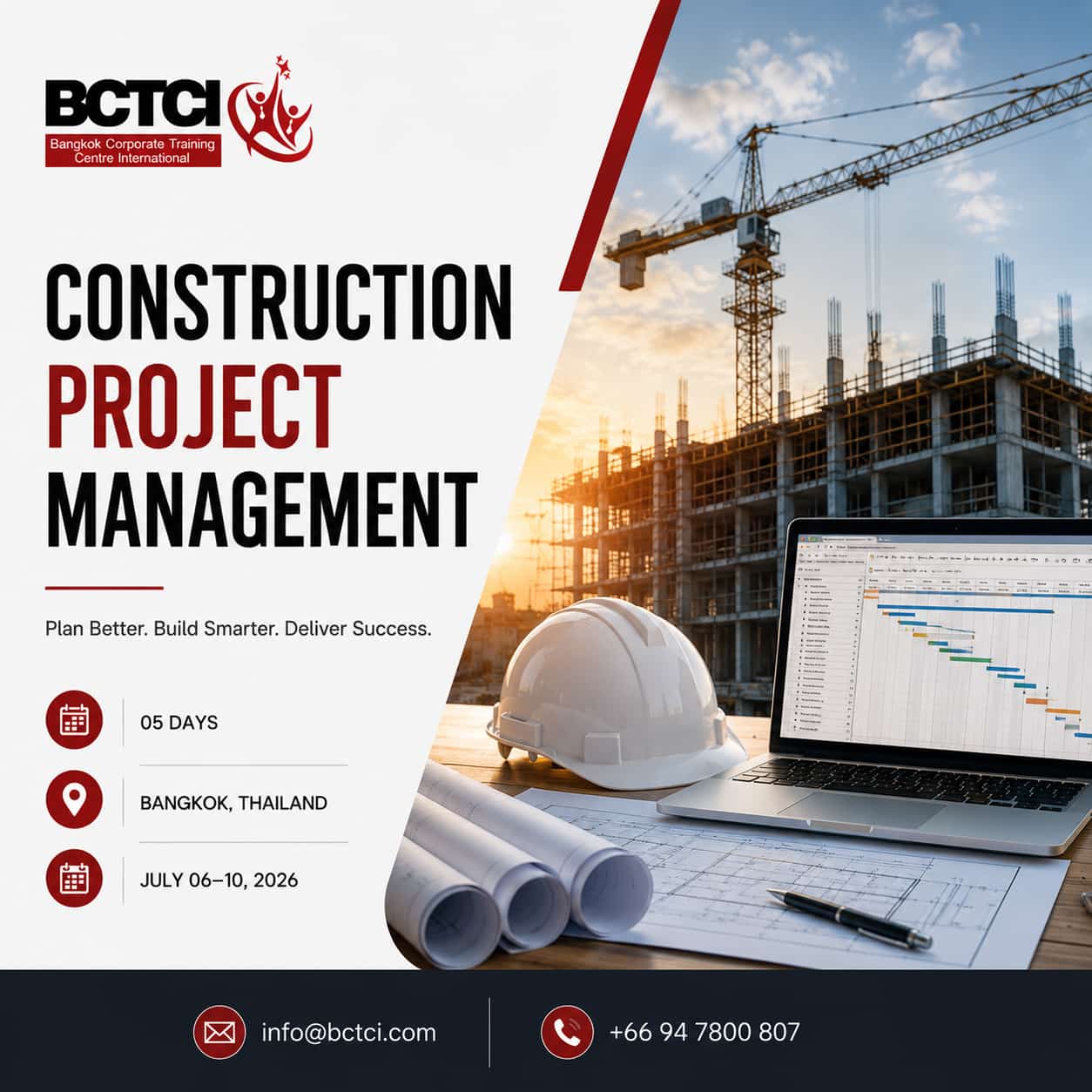
Construction Project Management |
|
Duration |
05 Days |
|
Date |
July 06-10,2026 |
|
Venue |
Bangkok, Thailand |
|
Investment |
1,890 USD |
|
|
|
|
|
+66 94 7800 807 |
Course Overview:
This 5-day professional training program is designed to strengthen the ability of construction professionals to plan, manage, monitor, and successfully deliver construction projects. The course covers the complete construction project lifecycle, including project initiation, scope planning, scheduling, budgeting, procurement, contracts, risk management, quality control, site coordination, stakeholder communication, claims, delays, safety, sustainability, and project close-out.
It is suitable for project managers, engineers, site managers, construction supervisors, contract administrators, procurement officers, consultants, government infrastructure teams, and professionals involved in construction, civil works, and infrastructure development projects.
Course Objectives:
By the end of this course, participants will be able to:
- Understand the full lifecycle of construction project management from initiation to close-out.
- Develop project scope, work breakdown structures, schedules, budgets, and resource plans.
- Apply practical tools for construction planning, monitoring, reporting, and control.
- Manage contractors, consultants, suppliers, site teams, and stakeholders effectively.
- Identify, analyze, and respond to construction project risks and delays.
- Improve cost control, procurement planning, quality assurance, and contract administration.
- Strengthen leadership, communication, decision-making, and problem-solving skills on construction sites.
- Apply best practices in health, safety, environmental, and sustainability management.
- Manage variations, claims, disputes, and project documentation professionally.
- Ensure timely project delivery within agreed scope, budget, quality, and compliance requirements.
Course Outline:
Construction Project Foundations, Planning & Scope Management
Module 1: Introduction to Construction Project Management
- Nature and complexity of construction projects
- Key differences between construction and general project management
- Construction project lifecycle
- Common causes of project failure
- Roles of owners, consultants, contractors, subcontractors, and regulators
Module 2: Project Initiation and Feasibility
- Project concept and business case
- Technical, financial, environmental, and social feasibility
- Project charter and authorization
- Defining project success criteria
- Early-stage risk and stakeholder identification
Module 3: Construction Project Scope Management
- Defining project scope and deliverables
- Scope statement preparation
- Managing scope boundaries
- Preventing scope creep
- Scope approval and change control
Module 4: Work Breakdown Structure for Construction Projects
- Developing construction-based WBS
- Breaking down civil, structural, MEP, architectural, and finishing works
- Linking WBS with cost, schedule, procurement, and responsibilities
- WBS coding and control accounts
- Practical WBS development exercise
Module 5: Project Planning and Execution Strategy
- Construction execution planning
- Site logistics planning
- Method statements and construction sequencing
- Resource planning and mobilization
- Developing an integrated project management plan
Scheduling, Cost Control & Resource Management
Module 6: Construction Scheduling Techniques
- Bar charts and Gantt charts
- Critical Path Method
- Milestones and dependencies
- Lead, lag, float, and constraints
- Schedule baseline development
Module 7: Time Management and Progress Monitoring
- Tracking planned vs actual progress
- Look-ahead schedules
- Weekly and monthly progress reporting
- Schedule variance analysis
- Recovery and acceleration planning
Module 8: Cost Estimation and Budget Development
- Types of construction cost estimates
- Direct and indirect costs
- Quantity take-off basics
- Contingency and escalation
- Cost baseline preparation
Module 9: Construction Cost Control
- Budget monitoring and cost reporting
- Cost variance analysis
- Earned Value Management basics
- Cash flow planning
- Preventing cost overruns
Module 10: Resource and Productivity Management
- Labor, equipment, and material planning
- Resource loading and leveling
- Productivity measurement
- Equipment utilization
- Managing resource shortages and bottlenecks
Procurement, Contracts, Quality & Risk Management
Module 11: Construction Procurement Management
- Procurement planning for construction projects
- Contractor and supplier selection
- Tendering and bid evaluation
- Procurement schedules
- Managing long-lead items
Module 12: Contract Management in Construction Projects
- Key construction contract types
- Lump sum, unit rate, cost-plus, design-build, and EPC contracts
- Contract documents and hierarchy
- Roles, obligations, and liabilities
- Contract compliance monitoring
Module 13: Variations, Claims and Change Management
- Causes of variations in construction projects
- Variation request and approval process
- Claims identification and substantiation
- Delay claims and cost claims
- Documentation required for claims management
Module 14: Quality Management in Construction
- Quality planning and quality control
- Inspection and test plans
- Non-conformance reports
- Defects management
- Quality assurance systems and audits
Module 15: Risk Management for Construction Projects
- Identifying technical, financial, contractual, environmental, and safety risks
- Risk register development
- Risk probability and impact assessment
- Risk response strategies
- Monitoring and updating construction risks
Site Management, Safety, Stakeholders & Performance Control
Module 16: Site Management and Construction Coordination
- Site organization structure
- Daily site coordination
- Interface management among trades
- Site meetings and action tracking
- Managing subcontractors and field teams
Module 17: Health, Safety and Environmental Management
- Construction safety planning
- Hazard identification and risk control
- Permit-to-work systems
- Incident reporting and investigation
- Environmental protection and site compliance
Module 18: Stakeholder and Communication Management
- Identifying internal and external stakeholders
- Communication planning
- Managing client, consultant, contractor, and community expectations
- Meeting management and reporting lines
- Conflict prevention through communication
Module 19: Project Monitoring, Reporting and Control
- Key performance indicators for construction projects
- Dashboard reporting
- Progress measurement techniques
- Issue logs and action registers
- Management reporting for decision-making
Module 20: Managing Delays and Disruptions
- Common causes of construction delays
- Delay analysis methods
- Time impact analysis basics
- Mitigation and recovery plans
- Communication and documentation of delays
Leadership, Digital Tools, Sustainability & Project Close-Out
Module 21: Leadership for Construction Project Managers
- Leadership in high-pressure construction environments
- Decision-making under uncertainty
- Managing multidisciplinary teams
- Conflict resolution on site
- Building accountability and performance culture
Module 22: Digital Tools in Construction Project Management
- Use of MS Project, Primavera P6, Excel, and digital dashboards
- BIM for project coordination
- Document control systems
- Mobile site reporting tools
- Digital transformation in construction management
Module 23: Sustainability and ESG in Construction Projects
- Sustainable construction principles
- Waste reduction and material efficiency
- Energy-efficient construction practices
- Environmental and social impact considerations
- Green building and responsible project delivery
Module 24: Project Close-Out and Handover
- Testing, commissioning, and inspections
- Punch lists and defect liability period
- As-built drawings and documentation
- Final account and contract closure
- Client handover and lessons learned
Module 25: Practical Case Study and Action Planning
- Construction project case analysis
- Identifying risks, delays, and control gaps
- Developing corrective action plans
- Group presentation and discussion
- Personal action plan for workplace application
Personal and Organizational Impacts
Personal Impacts
Participants will be able to:
- Improve confidence in managing construction projects from planning to close-out.
- Strengthen technical, contractual, financial, and leadership skills.
- Communicate more effectively with clients, consultants, contractors, and site teams.
- Handle delays, changes, disputes, and pressure more professionally.
- Apply practical tools for scheduling, budgeting, risk management, and reporting.
- Make better project decisions based on data, documentation, and project controls.
Organizational Impacts
Organizations will benefit through:
- Improved project delivery performance.
- Reduced delays, cost overruns, defects, and disputes.
- Better contractor and supplier management.
- Stronger project governance, documentation, and control systems.
- Higher safety, quality, and compliance standards.
- Improved stakeholder satisfaction and project accountability.
- Greater ability to deliver infrastructure and construction projects on time and within budget.
Main Takeaways
By the end of the program, participants will gain:
- A complete understanding of construction project management principles and best practices.
- Practical knowledge of planning, scheduling, budgeting, procurement, and contract control.
- Tools to monitor progress, cost, quality, risks, and performance.
- Techniques to manage contractors, consultants, suppliers, and project stakeholders.
- Skills to identify and respond to delays, variations, claims, and disputes.
- Stronger knowledge of construction safety, quality, and environmental compliance.
- Awareness of digital tools, BIM, dashboards, and reporting systems.
- A practical action plan to improve project performance in their own organization.
Course Training Methodology
The course will use a practical and interactive learning approach, including:
- Expert-led presentations and guided discussions
- Construction project case studies
- Group exercises and team-based assignments
- Project planning and scheduling practice
- Risk register and WBS development exercises
- Contract, claims, and delay scenario analysis
- Real-world examples from infrastructure, buildings, and civil works projects
- Role-play on stakeholder communication and site conflict resolution
- Practical templates for reporting, monitoring, and project control
- End-of-course action planning for workplace application
Course Essentials
Participants will receive knowledge and practical tools related to:
- Construction project lifecycle management
- Scope, schedule, cost, quality, risk, and procurement control
- Work Breakdown Structure development
- Construction scheduling and progress monitoring
- Cost estimation and budget control
- Contract administration and claims management
- Variation and change control
- Site coordination and subcontractor management
- HSE and environmental compliance
- Stakeholder communication and reporting
- Digital construction project management tools
- Project close-out, handover, and lessons learned