
|
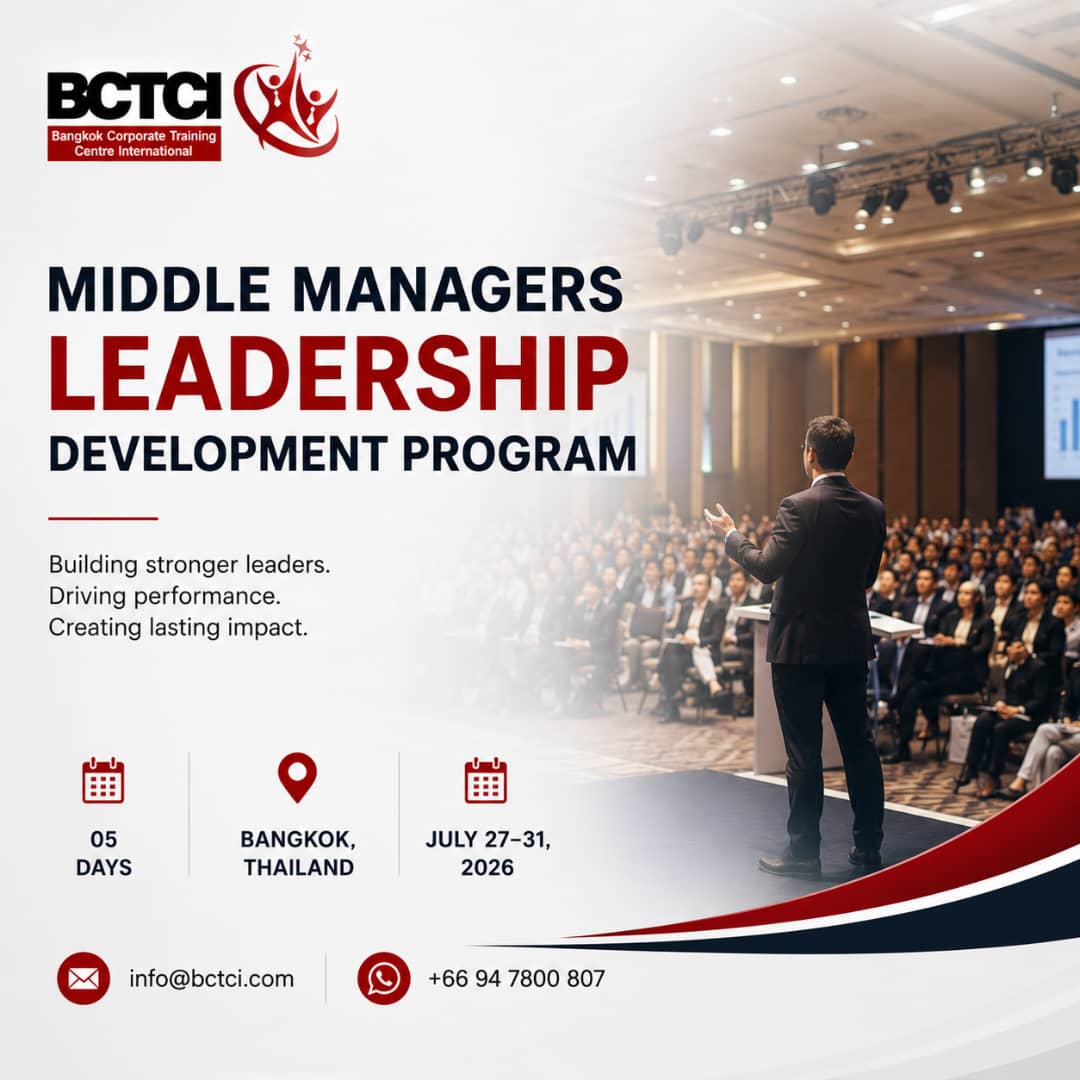
Course |
Middle Managers Leadership Development Program |
|
Duration |
05 Days |
|
Date |
July 27-31,2026 |
|
Venue |
Bangkok, Thailand |
|
Investment |
1,690 USD |
|
|
|
|
|
+66 94 7800 807 |
Course Overview
Middle managers play a critical bridging role between senior leadership and operational teams. They are responsible for translating strategy into execution, managing people, driving performance, and ensuring organizational alignment.
This program equips participants with advanced managerial competencies, including leadership, decision-making, communication, performance management, and strategic execution, enabling them to operate effectively in complex and dynamic environments.
Course Objectives:
By the end of this program, participants will be able to:
- Translate organizational strategy into actionable plans
- Lead teams effectively and manage performance outcomes
- Strengthen decision-making and problem-solving capabilities
- Enhance communication and stakeholder management skills
- Manage change, conflict, and organizational challenges
- Build high-performing and motivated teams
- Improve operational efficiency and accountability
- Strengthen leadership presence and managerial confidence
Course Outline:
Module 1: The Role of Middle Managers in Modern Organizations
- Strategic importance of middle management
- Bridging leadership and operations
- Key competencies of high-performing managers
Module 2: Strategic Thinking and Execution
- Understanding organizational strategy
- Translating strategy into action plans
- Aligning departmental goals with corporate objectives
Module 3: Leadership Styles and Adaptive Leadership
- Leadership theories and models
- Situational leadership
- Leading in dynamic environments
Module 4: Emotional Intelligence for Managers
- Self-awareness and self-regulation
- Social awareness and relationship management
- Emotional intelligence in leadership
Module 5: Effective Communication for Managers
- Strategic communication techniques
- Communicating with senior leadership and teams
- Active listening and feedback
Module 6: Building High-Performance Teams
- Team dynamics and collaboration
- Creating a culture of accountability
- Motivating and engaging teams
Module 7: Performance Management Systems
- Setting KPIs and performance metrics
- Monitoring and evaluating performance
- Performance appraisal techniques
Module 8: Coaching and Mentoring Skills
- Coaching frameworks for managers
- Developing team capabilities
- Providing constructive feedback
Module 9: Decision-Making and Problem Solving
- Analytical and critical thinking
- Decision-making frameworks
- Solving complex business problems
Module 10: Delegation and Empowerment
- Effective delegation techniques
- Empowering team members
- Managing accountability
Module 11: Time and Priority Management
- Managing competing priorities
- Productivity tools and techniques
- Avoiding burnout and inefficiency
Module 12: Change Management and Transformation
- Leading change initiatives
- Managing resistance
- Change communication strategies
Module 13: Conflict Management and Resolution
- Identifying sources of conflict
- Conflict resolution techniques
- Building collaborative solutions
Module 14: Influencing and Stakeholder Management
- Stakeholder analysis
- Influencing without authority
- Managing expectations
Module 15: Risk Management for Managers
- Identifying operational risks
- Risk mitigation strategies
- Building risk-aware teams
Module 16: Financial Awareness for Managers
- Understanding budgets and financial reports
- Cost control and resource allocation
- Financial decision-making
Module 17: Project Management for Middle Managers
- Project planning and execution
- Monitoring progress and performance
- Managing project risks
Module 18: Innovation and Continuous Improvement
- Driving innovation within teams
- Process improvement techniques
- Lean and efficiency principles
Module 19: Organizational Culture and Ethics
- Building a positive work culture
- Ethical leadership practices
- Promoting integrity and compliance
Module 20: Crisis Management and Resilience
- Managing crises and uncertainties
- Building resilient teams
- Leadership during disruption
Module 21: Data-Driven Decision Making
- Using data for management decisions
- Performance analytics
- Reporting and dashboards
Module 22: Cross-Functional Collaboration
- Working across departments
- Breaking silos
- Building organizational alignment
Module 23: Digital Transformation and Management
- Role of technology in management
- Digital tools for managers
- Managing remote and hybrid teams
Module 24: Leadership Presence and Professional Impact
- Building executive presence
- Personal branding for managers
- Communication confidence
Module 25: Personal Development and Action Planning
- Creating a personal leadership development plan
- Applying learning in the workplace
- Continuous improvement strategies
Personal Impact:
Participants will:
- Become more confident and effective leaders
- Improve decision-making and problem-solving skills
- Strengthen communication and team management
- Enhance ability to manage change and conflict
- Develop stronger leadership presence
Organizational Impact
Organizations will benefit from:
- Stronger middle management performance
- Improved team productivity and engagement
- Better alignment between strategy and execution
- Enhanced operational efficiency
- Stronger leadership pipeline
Key Takeaways
Participants will gain:
- Practical tools for managing teams and performance
- Strategic thinking and execution skills
- Leadership and communication frameworks
- Decision-making and problem-solving techniques
- Tools for managing change, conflict, and stakeholders
Training Methodology
This program uses high-impact, practical learning approaches, including:
- Interactive lectures and expert insights
- Real-life case studies
- Group discussions and workshops
- Role-play and simulations
- Problem-solving exercises
- Leadership assessments
- Action planning sessions
Practical Exercises & Activities
Participants will engage in:
- Leadership simulations
- Team-building exercises
- Case study analysis
- Conflict resolution scenarios
- Performance management exercises
- Strategic planning workshops